We don’t just experience crisis—we live through it as a story unfolding in real time.
Available Now!
Signed Copies shipped within the US: To place an order for a signed copy of The Anatomy of Resilience, including a personalized inscription please click here. Please note that copies will ship every 3-5 business days. Within the US only.
SoCal locals only: If you would like to purchase a signed local pick up copy (Long Beach or at an upcoming event) with a personalized inscription please use this link.
International: For a signed copy with personalized inscription to be shipped internationally, please send me an email (jennynovakpublications at gmail) for custom pricing.
Unsigned copies: The paperback and Kindle e-book versions of The Anatomy of Resilience are now available for purchase on Amazon!
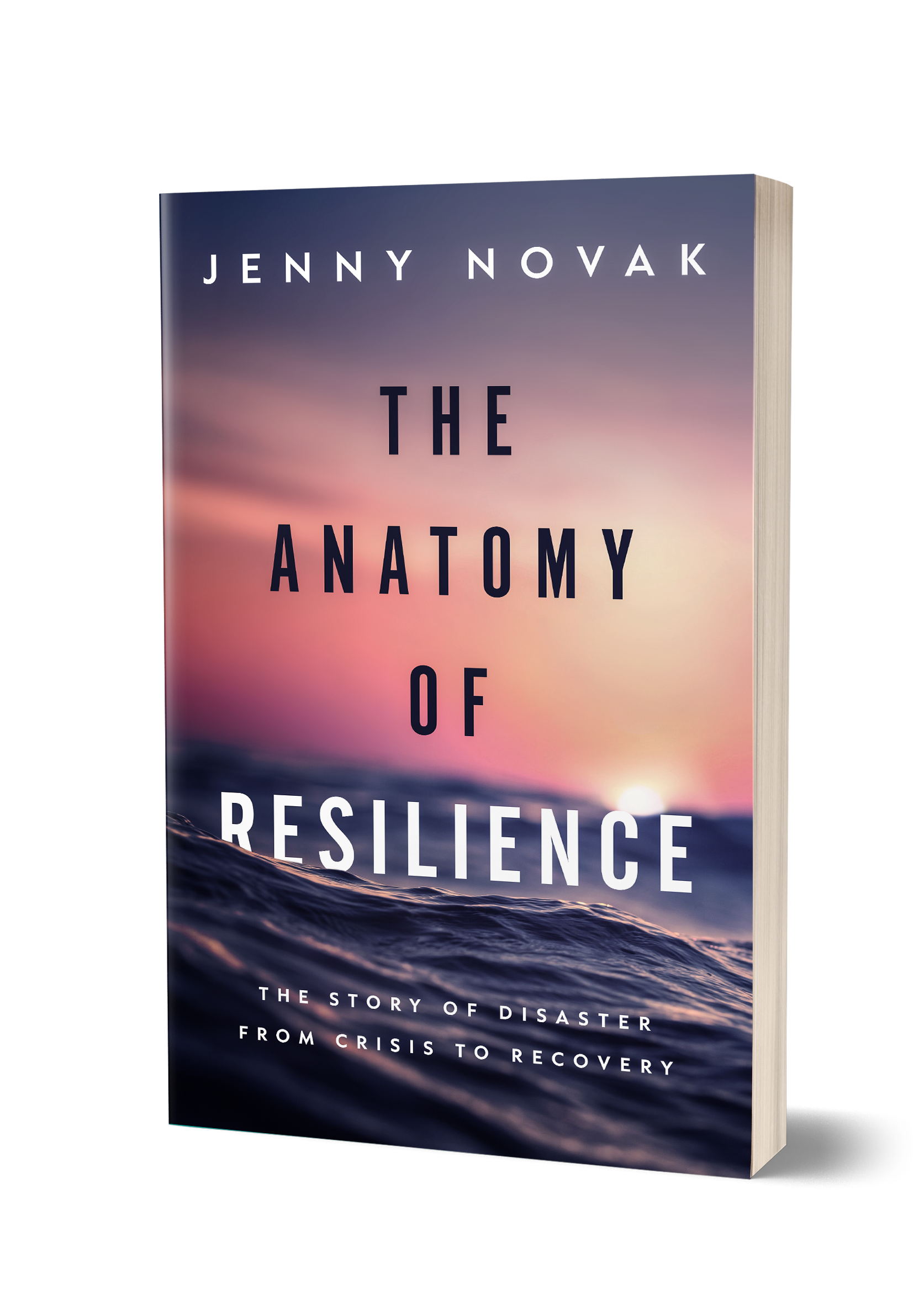
A new framework for understanding how disruption unfolds—and how we move through it.
Disasters are not just events—they are stories that unfold over time. And when we find ourselves inside them, we rarely know where we are in the narrative.
In The Anatomy of Resilience, emergency manager and cancer survivor Jenny Novak explores how crises—whether large-scale disasters or deeply personal disruptions—follow a recognizable arc. Drawing from frontline response to major California wildfires and her own unexpected cancer diagnosis at age twenty-six, Novak introduces a human-centered framework for understanding crisis through the phases of Nightfall, Midnight, and Dawn.
This is not a traditional preparedness guide. Nor is it a simple survival memoir. Instead, Novak reveals how people experience crisis from the inside—how we interpret early warnings, how uncertainty reshapes our sense of time, and how relationships and connection influence our path forward.
By viewing crisis as a story unfolding in real time, The Anatomy of Resilience offers readers a new way to orient themselves within disruption. Whether facing illness, disaster, organizational upheaval, or personal loss, readers will gain clarity about where they are in the arc—and how resilience takes shape as the story moves forward.
Who This Book Is For:
- Leaders and decision-makers navigating uncertainty
- Emergency Managers and Healthcare professionals interested in the human side of disaster
- Individuals experiencing personal disruption
- Anyone seeking to understand resilience beyond checklists